The Guitar in the Corner Is Still on the Team: Keeping the Hobby Shelf Alive in 2026
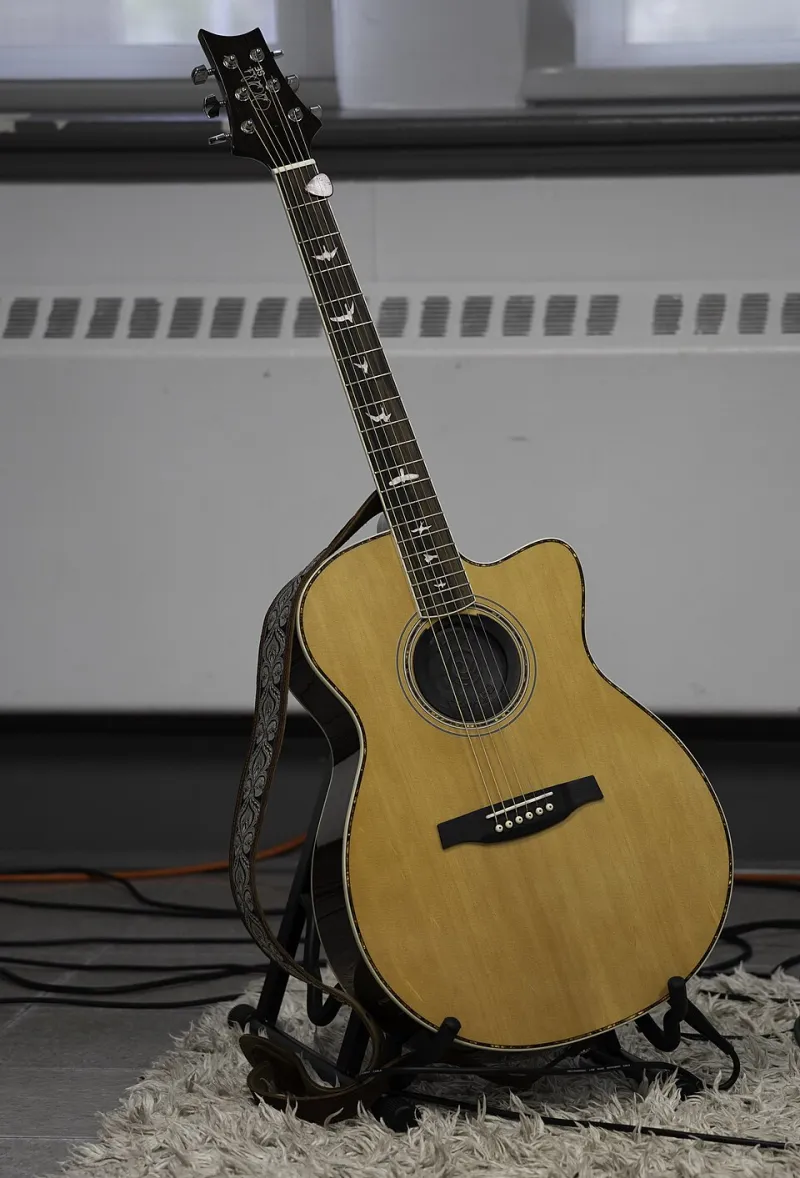
Photo: Wilfredor, CC0, via Wikimedia Commons
Every home has a hobby shelf, even if it isn’t technically a shelf. Sometimes it’s a guitar leaning in the corner. Sometimes it’s a jar of sourdough starter in the back of the fridge, quietly fermenting like a tiny citizen petition for slower mornings. Sometimes it’s a watercolor set still wrapped in the plastic from a Target run that felt, at the time, like the beginning of a whole new personality.
I have a guitar. I bought it used in a parking lot in 2019 from a guy who assured me it “just needs new strings, maybe.” It has moved through three apartments and one regrettable lamp. I have played it enough to learn four chords, two of which I can still find without looking. The other two are in witness protection.
By the cold math of the 80/20 rule, this guitar is not earning its square footage. It gets maybe 20 minutes of real attention every four months. But I’ve stopped treating that as a verdict. The 80/20 lens is useful for spotting where your actual time goes. It is not a performance review for your personality.
The 80/20 Rule Is Not a Performance Review
The 80/20 rule says a small slice of your hobbies gets most of your practice time. That’s not a scandal. It’s a roster. You have starters and bench players, and the bench is not there to embarrass the starters. It’s there because seasons change, people get curious, and sometimes the thing you need on a Tuesday night is the thing you haven’t touched since spring.
We tend to talk about dormant hobbies as failures. The Peloton becomes a coat rack. The bread machine becomes a countertop monument to ambition. The knitting project becomes a scarf for a ghost. And sure, there’s comedy in that. But there’s also a quieter truth: the hobby you don’t practice is still doing something. It’s holding a door open for a version of you who might walk through it later.
That’s the identity value. The guitar in the corner is not just wood and strings. It’s a bookmark. It says: at some point, you wanted to make noise on purpose. The sourdough starter says: you once believed breakfast could be a project. The watercolor set says: you were not immune to the idea of a Sunday afternoon with a mug and a brush.
None of that is cancelled just because the active 20% of your hobby life currently belongs to, say, pickleball and a very specific podcast about unsolved hotel mysteries.
A Hobby Is a Placeholder for a Version of You
Americans are weirdly moral about leisure. We turn rest into productivity, exercise into a leaderboard, and hobbies into side hustles. So when a hobby goes quiet, it starts to feel like a character flaw. The unused keyboard looks less like an instrument and more like evidence.
But a hobby doesn’t have to be active to be legitimate. Think of it as optionality. You keep a rain jacket because it might rain. You keep a decent set of screwdrivers because something might wobble. You keep the unplayed guitar because the person who bought it is still in there somewhere, and sometimes that person wants to play “Wonderwall” badly enough to annoy everyone in a three-room radius.
This is not delusion. It’s inventory. The trick is keeping the inventory honest enough that it doesn’t turn into a guilt museum.
A Gentle 2026 Audit, Not an Intervention
As we round into the end of 2026, this is the season when many of us start drafting grand January plans. The temptation is to declare a hobby amnesty: either practice everything or purge it all. That’s too dramatic for a Tuesday.
Instead, try a gentle audit. Four questions, no clipboard required.
-
Does thinking about this hobby make future-you feel lighter or more behind? If the answer is “more behind,” that’s data. It might mean the hobby needs a different shape, or it might mean it needs to move to storage. Guilt is not a practice schedule.
-
Is the barrier physical or emotional? A guitar in a case under the bed is a hobby with a locked door. A guitar on a stand is a hobby with an open invitation. Sometimes the fix isn’t discipline; it’s placement. Move the watercolor set to the table. Put the sourdough starter where you can see it. Make the thing one step easier to start.
-
Is there a ten-minute version? Not every hobby needs a weekend retreat. Ten minutes of scales. One small sketch. One feeding. One page. If the only version of the hobby in your head is a two-hour production, you’ll skip it every time.
-
What is the actual cost of keeping it? Shelf space, yes. Mental noise, maybe. But be specific. Does it take up a whole closet, or just a corner? Does it make you feel bad once a month, or every time you open the cabinet? If the cost is low and the identity value is high, keep it. If the cost is high and the value is mostly nostalgia for a person you no longer recognize, release it without a ceremony.
The One That Gets Another Chance
Pick one. Not five. One aspirational hobby gets a 30-day trial in 2026. Lower the bar until it’s almost silly: three sessions of ten minutes each. Put the guitar on a stand. Buy one new brush. Feed the starter and actually make something with the discard. If it clicks, great. If it doesn’t, it goes back on the bench without shame.
The point is not to turn every dormant hobby into a second job. The point is to give the most promising one a fair look before the year turns over. You are allowed to run a small experiment without swearing a lifelong oath.
The Shelf Is Allowed to Be a Museum and a Workshop
My guitar is still in the corner. I played it last week for eleven minutes, badly, and it was fine. The strings are older than some of my opinions. The sourdough starter in my fridge is technically alive, though it has the energy of a employee on a Friday afternoon. The watercolor set is still mostly untouched, but I know exactly where it is.
That’s the deal with the 20% hobby. The active hobbies deserve your time. The quiet ones deserve a little respect. They are not failures. They are bench players, placeholders, reminders, and occasionally the thing that saves a rainy Sunday from becoming another scroll.
So keep the guitar. Or the starter. Or the set of watercolors. Just don’t ask every object on the shelf to justify itself by weekly output. Some things are there because they make your life bigger by being possible.